What is this report about?
Last article (https://lorcanajudge.com/blog/judge-report/dlc-bologna-head-judge-insight/) was about the Challenge, that is the single "main" event of the weekend, with thousands of competitors, and it focused on pre-event communication.
This article is about "the other tournaments", usually called "side events" or "scheduled events", and focuses on the logistics aspects.
The starting data and the visual summary
In the public page of the organizer (https://www.pastimesevents.com/disneylorcanadlc/), you find the list of scheduled events, with all the necessary data: day, starting time, format, rounds, necessary product (if the tournament is limited), prizes…
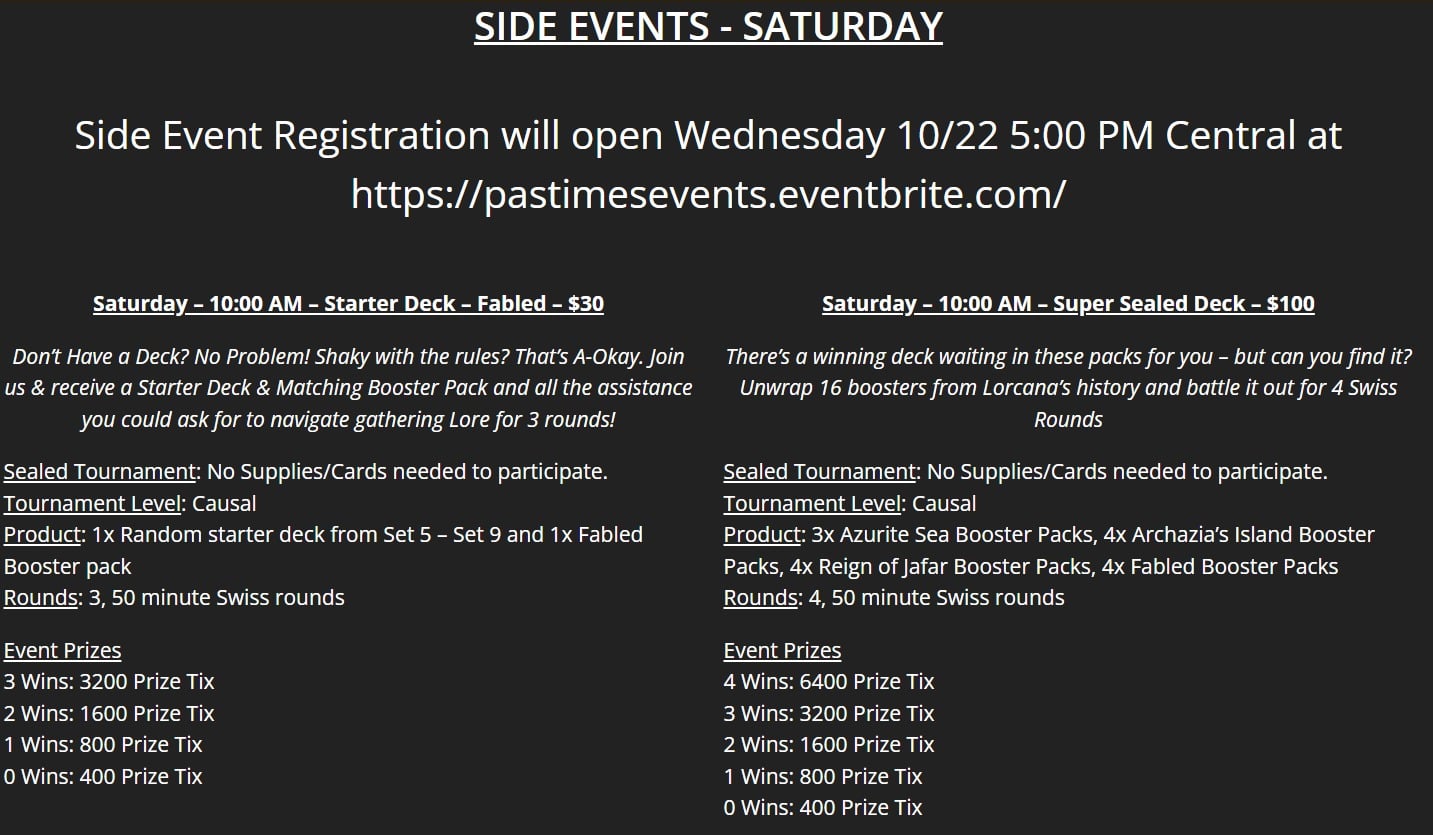
One of the first tasks is to get all these pieces of information in the graphic format you prefer.
Each of us may have a different way to organize information in the head and I will explain my way of organizing information with a sentence that either you understand and agree or just doesn't make sense:
"I am an engineer and my mind works with differentials"
When it comes to scheduled tournaments, what this sentence means is that I find the basic aspects of tournaments:
- 3 rounds of 50 minutes, best of 3
And then I add notes only for the tournaments that have something that is different from the standard :
- Super Sealed is 4 rounds,
- Multiplayer is 2 rounds,
- Ink Sprint is best of 1 and 25 minutes...
The areas of scheduled events
I am a visual person, and I am also used to assign a space to objects around me (have I already mentioned that my mind is the engineer type? Engineers live in a world of order, where every idea and every object has its "correct position"; it's an interesting gift and a terrible curse at the same time!).
While most of my colleagues seem like throwing tournaments here and there in a way that seems at random to me (I'm joking, there is always a system), I am a big fan of the very simple "Constructed here, sealed there, fun formats down there".
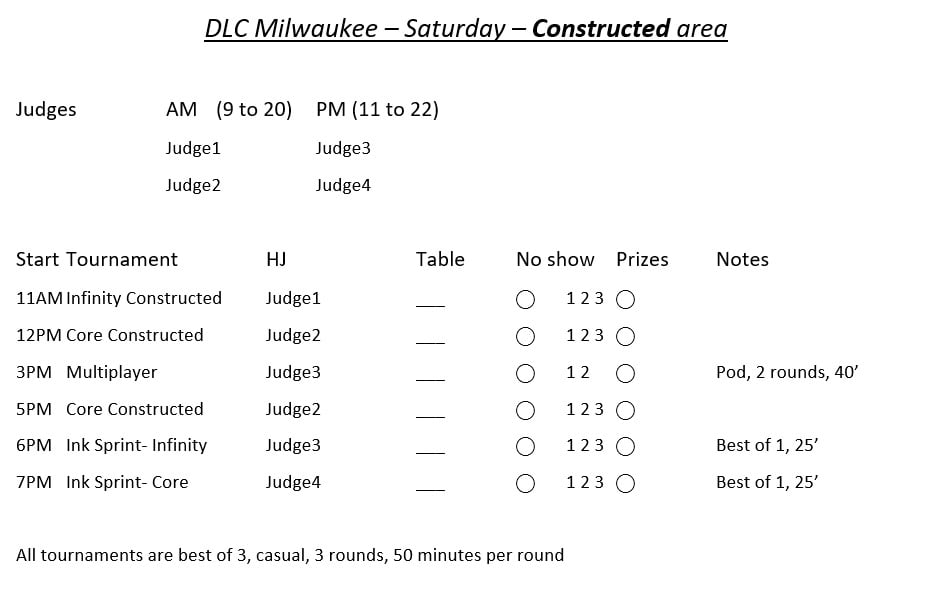
Each type of format has an area of the floor assigned, and also a team of judges.
Here you have my "single page with all the information I need":
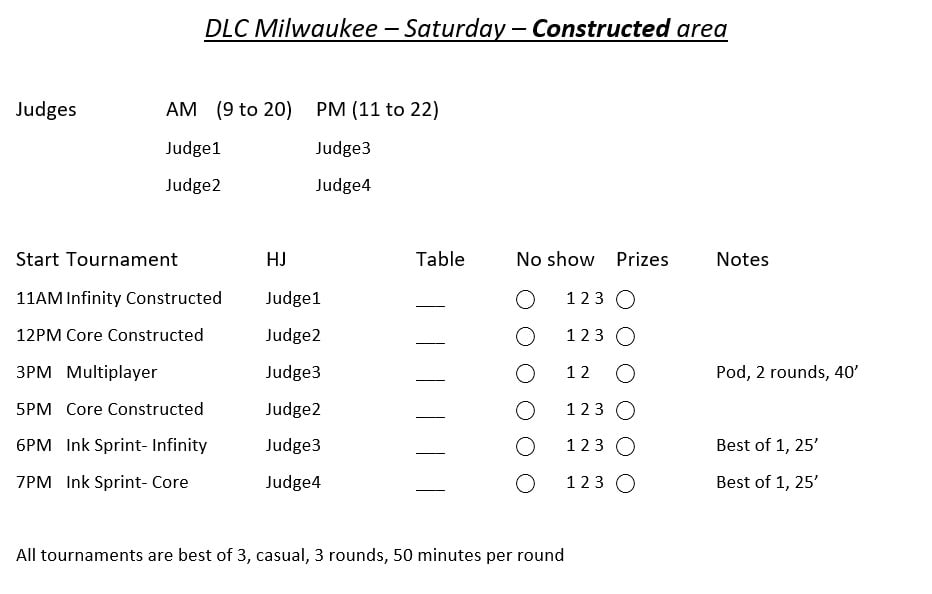
How do the areas of scheduled events work?
(here you have the message sent to DLC Milwaukee judges)
Think about defense in football or basketball:
- You have zone defense and man-to-man defense.
The equivalent of man-to-man defense is the usual "You have been assigned as head judge of one of the scheduled events". The system we will use in Milwaukee is the equivalent of zone defense: there will be three teams, who will take care of constructed, sealed and mixed format tournaments.
All the constructed tournaments will be in the same area of the room and, despite each of them will have a designated head judge, it will be the entire "constructed team" taking care of all constructed tournaments. Same for sealed tournaments, which will have an entire team; same for mixed format tournaments, again with a team of members of both the early and the late shift.
Despite each tournament will have a designated head judge, all members of the same team need to be aware of the status of all tournaments (rounds, table ranges, end of rounds), so that each team member would be able to take charge of each tournament in case the head judge had to go on break or not be available for some time; keeping the information regarding each tournament on a board is highly recommended.
Regarding breaks, all long and short breaks will be handled within the team; each team has people in pairs or groups of three, and my best explanation of breaks is "We are all adults, and we are able to communicate and cooperate; there will be no lunch plan; please organize your lunch breaks so that, at any moment, one member of each pair or group of three is on the floor; this will give you a high level of freedom, and you will have the responsibility to take care of yourself".
An important aspect will be "flexibility"; it may happen that we get moved from an area to another, temporarily or for the entire day; all will depend of needs of the event; let's always be flexible, and let's accept last minute changes; having areas organized by format and having clear information on the boards about each tournament should be helpful to move between areas.
Then, at any moment of the day and also regarding any aspect of your tournaments (rules, policy, logistics, investigations, translations…) Francisco and I will be available all day to support you.
Other logistics aspects and collaboration
The message to the judges above explains how judges are organized for each tournament:
- When Judge1 is the designated head judge, Judge2 and Judge3 are the floor judges;
- then, when a second tournament starts, Judge2 is also the head judge (in addition to helping Judge1 in Tournament1, that happens at few meters distance);
- then, when Tournament3 starts, it's Judge3 who is focused on the needs for Tournament3, with Judge1 and Judge2 available to help…
Another logistics aspect that become easier with this zone system is organizing the lunch breaks: Each micro-team is free to organize their lunch breaks the way they want (as long as they, together, make sure that all tournaments continue smoothly); this responsibility also encourages collaboration and organization of tasks.
Timesheet
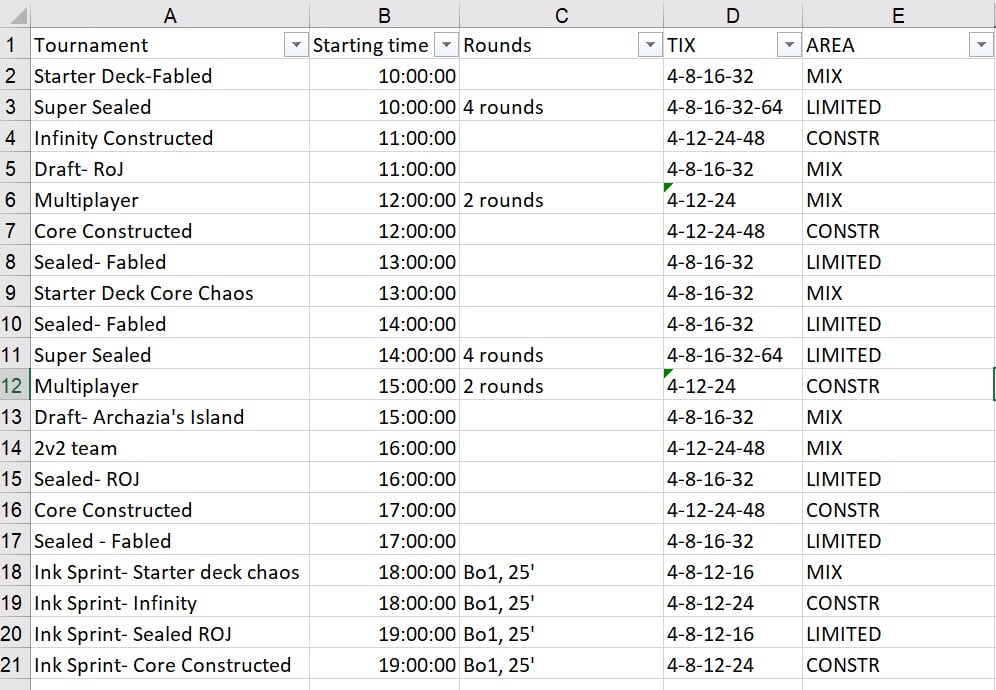
Then, in addition to the "single page per area"; I use a single page that keeps track of how tournaments progress during the day; here you have it:
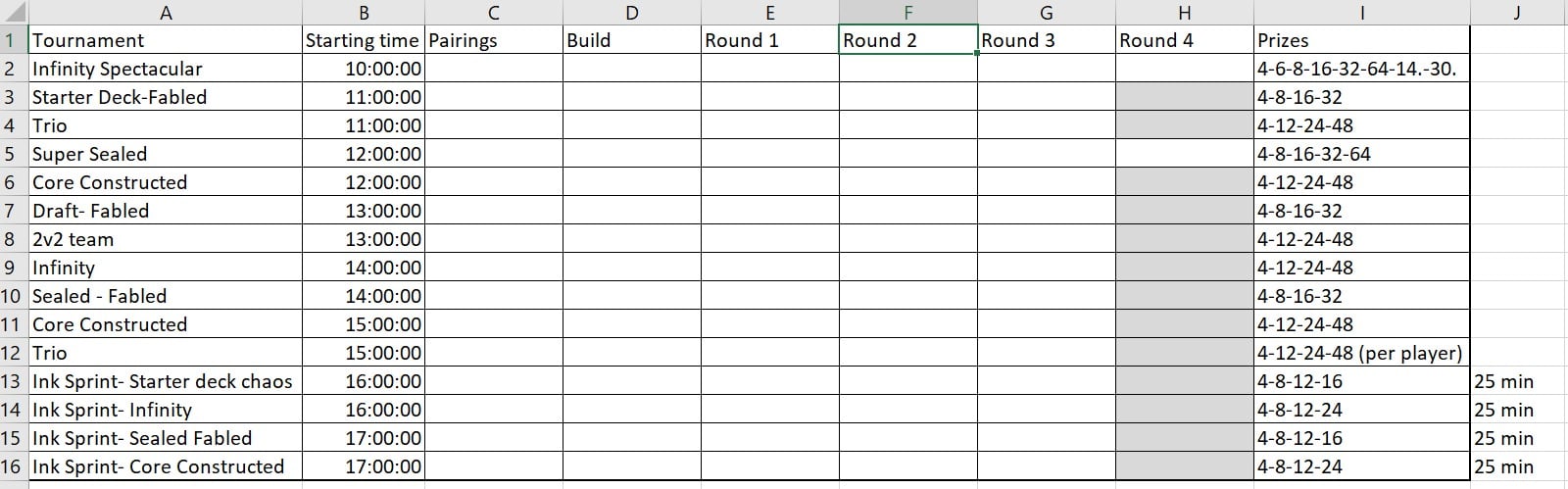
One of the goals is to have a rough idea about how each tournament is going; if a tournament is slower than expected, it's necessary to identify the causes of the delays and also find a solution; sometimes, it's also necessary to predict the tournament that will finish last (for dinner or dismantle needs).
Then, in these two documents you can see above, you may notice elements like "no show" (players who didn't show up for the tournaments, and who may need a refund or product being given at the info point) or some number about tix (the prizes that players receive for their wins and that they can then exchange for product at the prize wall).
The execution
________________________________________
OK, all this is about preparation.
Preparation is fundamental, as it's much easier to react and adapt to the last minute needs when we have a solid plan. Moving a few pieces around is much easier than rebuilding an entire system.
Each event has different difficulties, and it's good to learn from them.
Every time you create a plan, be flexible and ready to adapt of the specific needs of the day; even a very well-designed plan may not apply well to your event, and it doesn't mean that it was not a good plan.
Identify what worked and what didn't work, so that at your future events, you will:
- (wrong approach) "prepare a different plan"
- (correct approach) "have more options to choose from, with the goal to find the best plan for the specific needs of the day"
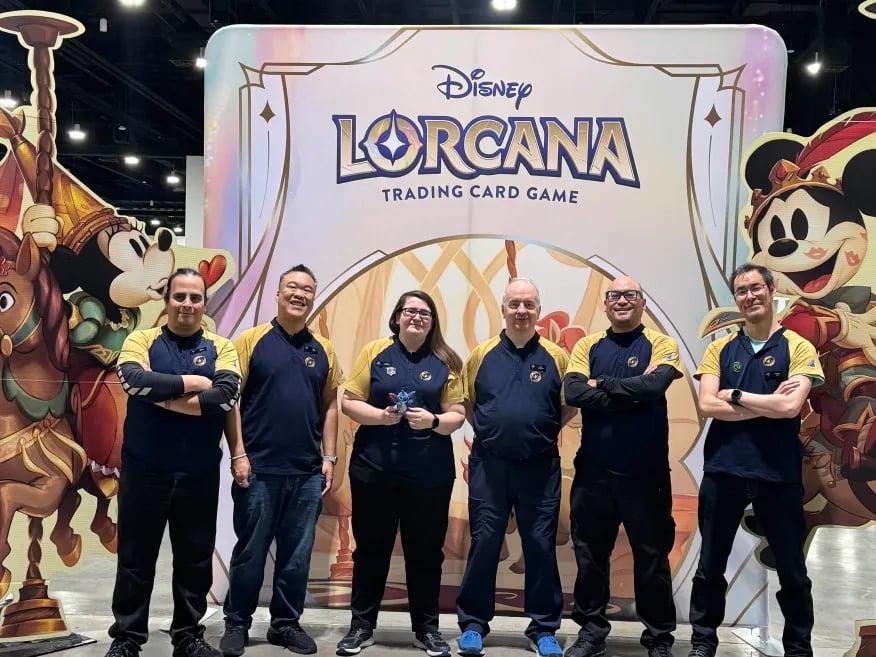 The head judges and assistant head judges of DLC Milwaukee: (from left to right) Omar Gonzalez, Phil Vuong, Imogen Lyford-Tilley, Mike Zimmerman, Carlos Ho, Raymond Fong
About the Author
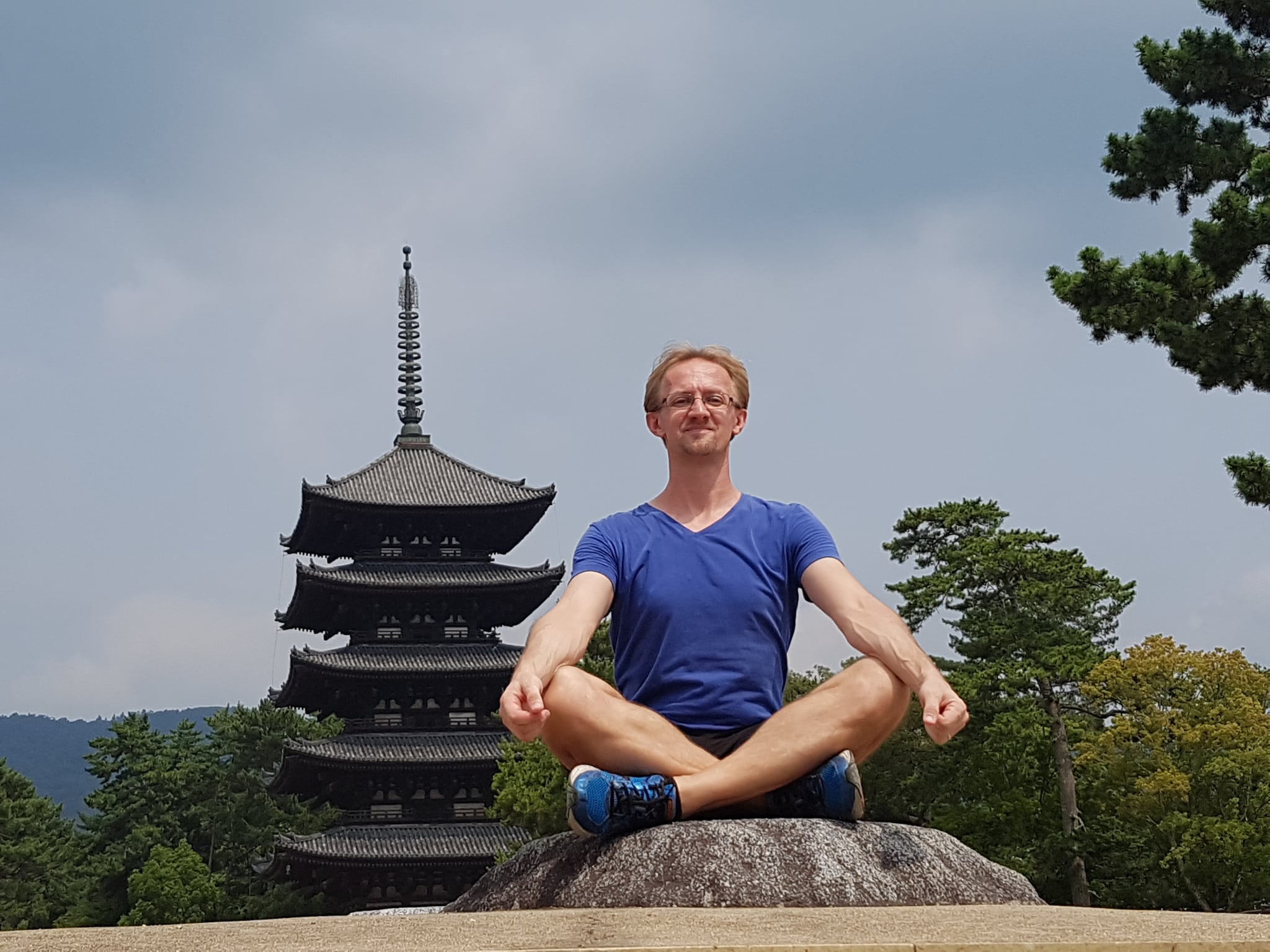
Riccardo Tessitori is a force of nature in the TCG judging world. With over 20 years of experience beginning in Magic: The Gathering in October 2001, he has become one of the most accomplished judges across multiple games, including Magic, Disney Lorcana, and Flesh and Blood. Speaking four languages fluently, he seamlessly navigates international tournaments, breaking down barriers between judge communities worldwide. Based in Turin, Italy, Riccardo works as a professional translator for games, software and novels. He's the kind of person you need to meet and learn from at least once in your judging career. His combination of expertise, innovation, and genuine dedication to mentorship makes him an invaluable leader in the community.